
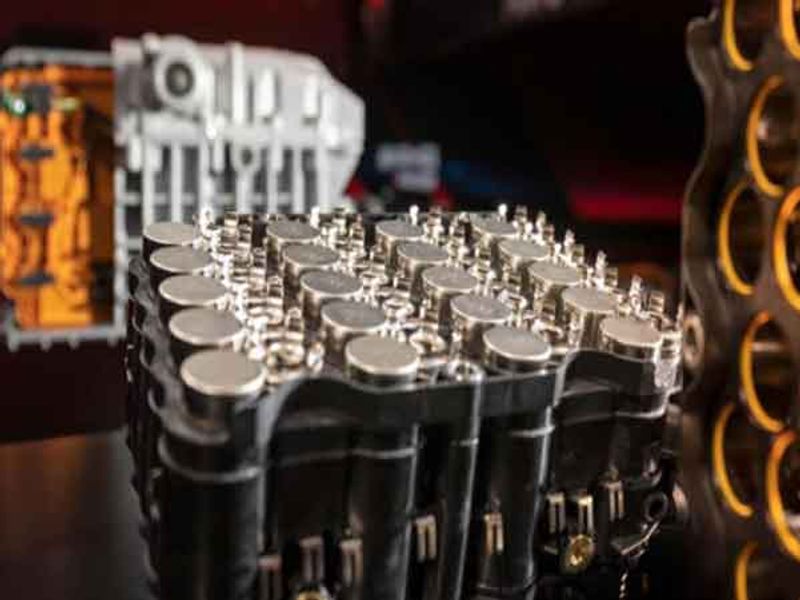
As the world shifts focus on renewable and green energy, in the quest for energy security and a cleaner environment, a new technology for the reuse of spent graphite recovered from end-of-life lithium-ion batteries could convert battery waste into a high-value functional material that improves fuel cell efficiency.
This would help promote sustainable recycling of lithium-ion batteries, reduce reliance on costly catalyst materials, enhance clean energy technologies, support fuel cell commercialisation and contribute to reduced environmental impact and improved energy security, according to information shared by the Ministry of Science and Technology on Monday.
With the rapid growth of lithium-ion batteries and fuel cell technologies, managing battery waste and the need for cost-effective, durable fuel cell catalysts are critical challenges, according to the ministry.
Scientists have been exploring whether recycled battery materials could be repurposed to address key performance limitations in fuel cells, and they have zeroed in on graphite, a functional additive in platinum-based oxygen reduction reaction (ORR) electrocatalysts.
Researchers from the International Advanced Research Centre for Powder Metallurgy and New Materials recovered graphite from spent lithium-ion batteries and chemically exfoliated it to increase surface area and other constituents.
They also carried out extensive physicochemical characterisation, electrochemical evaluation for ORR and methanol tolerance and optimisation of composition for maximum performance and stability.
“Herein for the first time, we demonstrate the exploration of exfoliated graphite (EFG) from spent graphite as a conductive additive to selectively reduce oxygen in the presence of methanol and protect it from carbon monoxide (CO) poisoning by utilising the edge functionalities of the exfoliated graphite.
The research has been published in the ACS Sustainable Resource Management, a peer reviewed international journal. Unlike earlier studies focused solely on alkaline media or on battery reuse, this work demonstrates methanol-tolerant ORR in acidic media using recycled graphite.
EFG is a kind of graphite material made from natural flake graphite or graphite compounds by chemical or electrochemical intercalation treatment, and then by rapid expansion at high temperature. It has wide applications in areas like battery electrode material, hydrogen storage material, sensor material, electromagnetic shielding material, heat exchangers and wastewater treatment.
Graphite is the predominant material for the anode that is the negative electrode, in rechargeable lithium-ion batteries which are widely used in electric vehicles, portable electronics and renewable energy storage.
When integrated with platinum catalysts, the exfoliated graphite formed a conductive network that enhanced both electronic conductivity and oxygen transport while selectively adsorbing methanol molecules. This also acted as a chemical barrier that suppressed methanol oxidation and platinum CO poisoning, offering superior performance and durability.
