
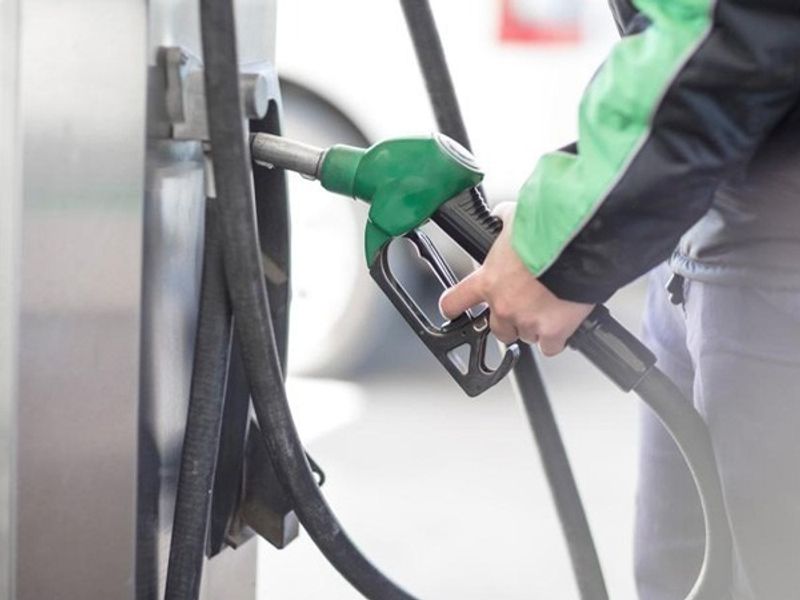
Growing environmental concerns over harmful emissions from vehicles and the disruption in the supply of Liquefied Petroleum Gas (LPG), a common cooking medium, because of the ongoing Middle East crisis has focused attention on the use of ethanol as a fuel blend in the transport sector and as an alternative for use in kitchens.
From April 1, the government made it mandatory for the sale of petrol blended with 20 percent ethanol, which is called E20. With the supplies of LPG being disrupted, the use of ethanol is also being debated as a viable substitute. As a renewable fuel, ethanol is a key component in lowering greenhouse gas emissions and reducing import dependence.
Biofuels and natural gas, according to the Ministry of Petroleum and Natural Gas, are India’s “bridge fuels”. They represent a viable, non-disruptive transition towards meeting our commitments to a greener world and are in line with our Nationally Determined Contribution (NDC), wherein India has signed up to Net Zero by 2070.
A study on life cycle emissions of ethanol done by NITI Aayog has said that greenhouse gas emissions in the case of use of sugarcane and maize-based ethanol are less by 65 percent and 50 percent, respectively, than those of petrol.
What is ethanol
Ethanol is a type of alcohol that is used as a biofuel, in solvents, and in beverages. It is a clean-burning liquid that can be used in cooking stoves designed for the purpose. It is a colourless, flammable liquid that produces a blue flame and emits fewer pollutants than other commonly used fossil fuels.
It is produced through the fermentation of sugars extracted from plants such as sugarcane, maize, and wheat or other agricultural residues and sugar-rich biomass. In India, most of the ethanol production is based on sugarcane. The raw material is processed in distilleries where fermentation by using yeast or other micro-organisms converts sugar into ethanol, which is then refined for use as a fuel or for blending in petrol.
In addition to fuel and fuel blends, ethanol’s industrial applications include wide use in paints, coatings, lacquers, cosmetics and pharmaceuticals. It is also the primary ingredient in antiseptics, disinfectants and sanitisers for killing micro-organisms. It is also used to produce other chemicals like ethyl acetate and ethyl acrylate.
Though ethanol is used in the food industry, high consumption of alcoholic beverages can result in intoxication and other serious health risks. High exposure to its vapours can cause dizziness and respiratory irritation.
Ethanol production in India
India’s ethanol production capacity is close to 1,990 crore liters annually, up from 518 crore liters in 2017–2018, with Uttar Pradesh being among the major production centers. A capacity enhancement of 400 crore liters is on the anvil.
To achieve the target of 20 percent ethanol blending in petrol and for other existing uses, a supply of at least 1,350 crore liters is required every year, thus creating a situation of overcapacity that can be exploited.
A major push is being given for domestic production and projects approved under various Ethanol Interest Subvention Schemes are enhancing capacity, ensuring sufficient supply for the E20 target. The government is giving incentives to new distilleries and upgrading existing ones, promoting dual-feed capabilities.
According to industry research reports, the global ethanol market is expected to be USD 98.7 billion in 2026 and projected to touch USD 134.3 billion by 2033, growing at an annual rate of 4.5 percent. Biofuel blending requirements, expanding industrial applications and increasing demands for bio-based chemical intermediates are propelling the global ethanol market upwards.
However, some challenges in the production and use of ethanol in India revolve around the availability of huge amounts of raw material, water-intensive cultivation of crops like sugarcane, diversion of cash crops for fuel production, expansive infrastructure for production and distribution and the need for specially designed or modified engines and stoves along with the requisite safety considerations.
LPG production and imports
India is the world’s third-largest consumer of LPG, using up around 33 million tonnes annually. Out of this, 85-90 percent is used in the domestic sector for cooking and the remaining for industrial and commercial purposes. Consumption has grown over sixfold since 1998, according to government data.
Over 60 percent of India’s LPG requirement is imported, mostly from Saudi Arabia, Qatar, the United Arab Emirates and Kuwait. The bulk of this supply transits the Strait of Hormuz, which is at the center of the geopolitical turmoil that has disrupted oil and gas supplies.
After the war in the Middle East broke out, domestic LPG production was ramped up by 30 percent, to over 50,000 tonnes daily, meeting over 60 percent of the demand. Import dependence also went down from about 55,000 tonnes to 30,000 tonnes.
Refiners were asked to maximize output, while imports from other sources like Russia, Australia and the US continued. Some supplies also came in from the war zone, with Iran, which controls the Strait of Hormuz, permitting Indian ships to pass.
Since oil and gas supplies are susceptible to global power shifts, geopolitical tensions and conflicts, there have been repeated demands from the intelligentsia to address this strategic vulnerability and give a fillip to energy security, while also saving foreign exchange. Apart from gas, India imports about 90 percent of its crude oil requirements.
Though ethanol is unlikely to totally replace LPG in the near future, it could complement this energy resource and offer a cleaner and cheaper alternative.
Ethanol’s impact on motor vehicles
The government’s roadmap was to achieve a 20 percent blending target by 2030, but has been advanced by almost five years, with the rollout this year. All petrol being sold across India must be E20 with a minimum Research Octane Number (RON) of 95. India rolled out the E10 fuel, having a blend of 10 percent, in 2022. Diesel will not be blended with ethanol.
The use of ethanol in petrol has pros as well as cons. On the bright side, it will offer a cleaner environment with lower greenhouse gas emissions as it will help burn fuel more efficiently, give a smoother and quicker acceleration, and a better ride quality. A higher octane rating also improves resistance to engine knocking.
On the flip side, it will marginally lower the vehicle’s mileage because the energy content of ethanol is about 30 percent lower than that of petrol. For vehicles manufactured after 2023, the expected drop is 2-4 percent; that is, if the car’s mileage was 15 kilometers per liter, it would come down to about 14.5 kilometers per liter. For vehicles manufactured between 2018 and 2023, the drop could be 3-7 percent, whereas for older vehicles, the drop could be as high as 10 percent.
Besides a slight reduction in power and pickup, especially in older or smaller vehicles, rough idling and cold-start issues can crop up. According to mechanics, such effects can be more pronounced in two-wheelers because their engines are smaller.
Ethanol, according to automobile experts, is” hygroscopic”, that is, it absorbs moisture, which can result in water accumulation in fuel tanks, corrosion in metal parts and degradation of rubber and plastic items like seals and hoses. All this could lead to higher maintenance costs.
