
Artificial Intelligence has transformed the way machines interpret language, recognise patterns and process vast amounts of information. But an experimental typography project by developer Eric Lu suggests that, despite rapid advances in multimodal AI, there may still be aspects of human perception that machines struggle to replicate.
Lu has developed Ghost Font, an experimental visual communication system that he claims can be read by humans but not easily deciphered by current AI models.
Sharing the project on X, Lu wrote, “I created a font called Ghost Font that only humans can read. Tested it in Fable and GPT 5.6 Sol Ultra and neither was able to decipher it correctly.” The post has since attracted more than 17 million views.”
What is Ghost Font?
Lu explains in his blog post, Ghost Font is not a conventional font file but an experimental method of conveying written messages through motion rather than static text.
He describes it as an anti-AI typography experiment that combines animation, visual noise and decoy patterns to create text that remains understandable to people while making it difficult for AI systems to interpret. Lu says the project is intended to explore whether written communication can be designed in a way that exploits the differences between human and machine perception.
How does it work?
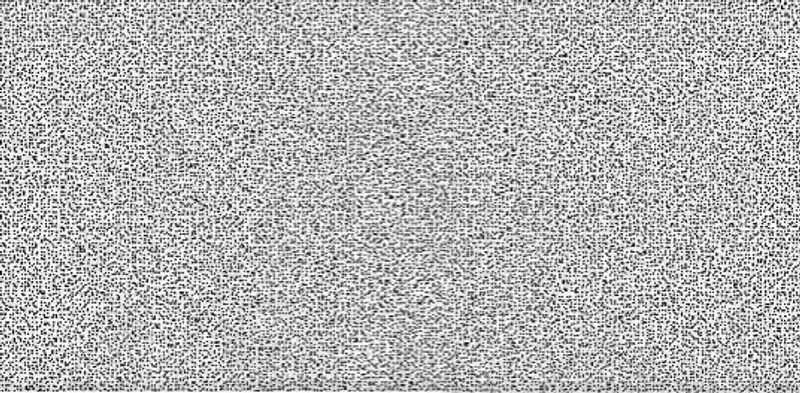
According to the developer, Ghost Font generates letters using animated dots that create an optical illusion. Instead of existing as visible static characters, the message emerges only through movement.
Lu explains that when the animation is paused, the dots blend into seemingly random patterns, making it nearly impossible to identify the hidden text from a single frame or screenshot. The message becomes visible only while the animation is playing, as the human brain naturally integrates motion over time to recognise patterns.
He says this design highlights a key difference between humans and many existing AI vision systems. While people perceive continuous motion, several current multimodal models primarily analyse videos as a sequence of individual frames, making it harder for them to detect information encoded only through movement.
According to him, the demonstration is intended to illustrate the concept rather than serve as a practical communication tool.
Why couldn’t AI read it?
Lu says he tested Ghost Font-generated videos with advanced AI models, including Claude, Fable and GPT Sol 5.6 Ultra. According to him, the models struggled to decode the hidden messages until they were prompted with the exact technique to do so.
To make decoding more difficult, Lu says each video also contains a deliberately embedded decoy message. According to him, an AI attempting to extract hidden text may identify the decoy first and mistake it for the actual message.
He emphasises that Ghost Font is not intended to replace encryption or secure communication. Instead, he describes it as an experiment exploring whether visual messages can be shared in a format that remains difficult for today’s AI systems to interpret.
What could it be used for?
Looking ahead, Lu believes the concept could have applications beyond artistic experimentation.
He suggests that motion-based text could potentially strengthen CAPTCHA systems, which have become increasingly vulnerable to AI-powered bots. Because the information exists through movement rather than static images, he argues it may be more challenging for automated systems while remaining accessible to human users.
As a next step, Lu says he plans to release the video-generation code as an open-source project and expand the system to support longer text strings.
I created a font called Ghost Font that only humans can read. Tested it in Fable and GPT 5.6 Sol Ultra and neither was able to decipher it correctly. pic.twitter.com/wy08KgZKH2
— Eric Lu (@ericlu) July 11, 2026
