
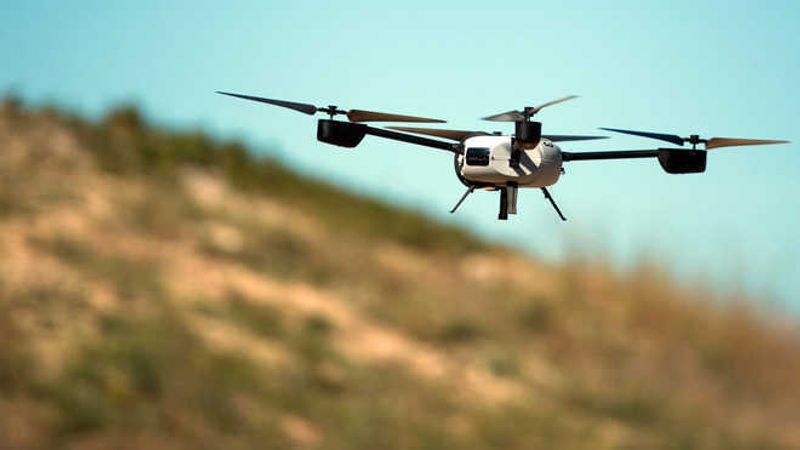
In a step towards smart farming, the Indian Council of Agriculture Research (ICAR) on Thursday said drone-based spraying in sugarcanes achieved 80.2 per cent weed control efficiency, saved 89 per cent water and reduced operational cost by 81.6 per cent.
Drone-based spraying uses unmanned aerial vehicles (UAVs) equipped with specialized tanks, pumps and nozzles to apply liquids such as pesticides, herbicides and fertilizers directly onto crops.
It replaces traditional manual or tractor-mounted methods by offering faster coverage, extreme precision and reduced chemical waste.
How It Works
Pre-Programmed Flight
The drone relies on GPS mapping to fly autonomously over designated areas, ensuring centimeter-level accuracy and preventing overlap.
Targeted Application
It hovers low over the fields, releasing chemicals in highly controlled droplet sizes based on the exact needs of the crop.
Real-Time Monitoring
Many models feature onboard sensors that adjust spraying rates on the fly depending on crop density or detected pest pressure.
According to the ICAR-Indian Sugarcane Research Institute, Lucknow, the move can help farmers achieve “precise spray, better control, and higher yield”.
“Drone-based spraying also reduces the costs. The method incurs Rs 380.9 per hectare spraying cost. The method offers unparalleled precision, covering an acre in just under 7 minutes while reducing water usage by up to 85% compared to manual spraying,” it said.
It is also highly effective for managing tall-canopy pests like whiteflies and early shoot borers and applying micronutrients.
