
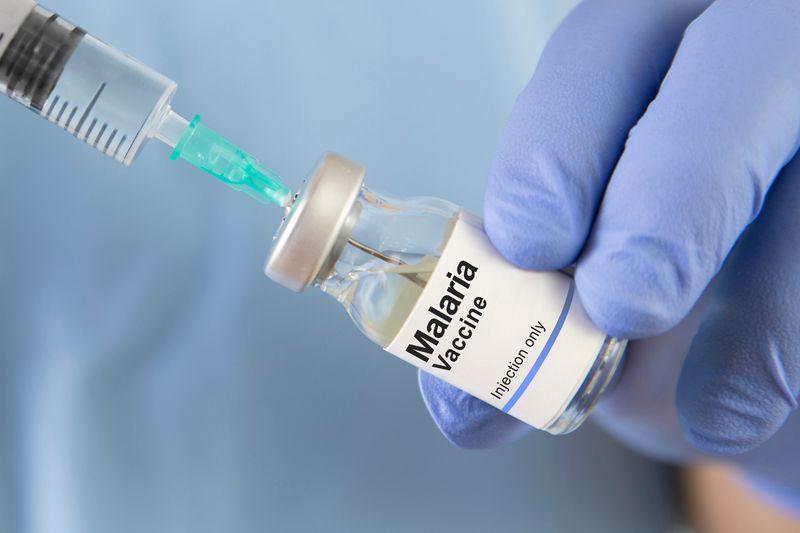
India plans to launch its indigenous malaria vaccine before 2030, a target set by the Centre to eradicate the disease.
Last year, the Indian Council of Medical Research (ICMR) granted non-exclusive rights for its multi-stage malaria vaccine, AdFalciVax, to five pharmaceutical companies Multistage Malaria Vaccine licensed to Indian Immunologicals Limited, Techinvention Lifecare Private Limited, Panacea Biotec Limited, Biological E Limited, and Zydus Lifesciences
Speaking on the sidelines of the launch of the second edition of ICMR-SHINE (Science and Health Innovation for NextGen Explorers) Secretary, Department of Health Research & Director General, ICMR, Dr Rajiv Bahl said, “The Indian malaria vaccine is under study. There is a global malaria vaccine. The Indian one is now under evaluation. It will still take a couple of years before we see whether that vaccine is available.”
Bahl said that the dengue vaccine is much more advanced. “It is in phase three trials, and by the end of next year, we are hoping we will have the final results of the phase three trial,” he informed.
Speaking with The Tribune, an ICMR scientist working on the malaria vaccine said, “We are trying to launch the vaccine before 2030 and a lot of work is going into it. We are coordinating with the industries. Antibodies are fed into the mosquitoes to check the efficacy. There is time in human trials. ICMR-Regional Medical Research Centre, Bhubaneswar (ICMR-RMRCBB); ICMR-National Institute of Malaria Research (ICMR-NIMR); and ICMR-National Institute of Immunology (NII), are working on the development of indigenous vaccine against malaria.”
“Unlike vaccines that primarily seek to protect the vaccinated individual, AdFalciVax is designed to both prevent infection and reduce transmission of the parasite, potentially helping to interrupt the malaria transmission cycle,” he said.
According to the expression of interest (EOI), AdFalciVax development study was funded by the Biotechnology Industry Research Assistance Council-National Biopharma Mission (BIRAC-NBM).
The vaccine uses Lactococcus lactis-based technology. Lactococcus lactis is a harmless bacterium commonly used to make products such as cheese and yogurt. Scientists can modify this bacterium in the laboratory so that it produces a particular protein (antigen) from the malaria parasite. While the bacterium itself does not cause malaria, however, it can be used as a carrier to deliver the malaria antigen.
ICMR on Tuesday also launched the official SHINE website, a dedicated platform hosting resources, updates, and opportunities for students interested in health research.
Alongside the launch, ICMR announced a nationwide school competition inviting students to frame their own research questions and propose potential solutions to real-world public health challenges. Around 30,000 students are expected to take part in this next phase of the initiative through invitations extended by ICMR laboratories across the country.
