
Physics, often considered a difficult subject because of its complex concepts and formulae, is being taught through poetry by a retired Rajasthan University professor who has turned topics such as rocket propulsion, black holes, the Raman Effect and quantum mechanics into Hindi verses and songs.
Rishi Kumar Singhal, former professor of physics at the University of Rajasthan, has developed an initiative called “Physics Through Poetry” to make the subject easier and more engaging for students.
Singhal has written four books — “Kavya Bhautiki”, “Sur Bhautiki”, “Geet Bhautiki” and “Raag Bhautiki” — containing around 250 poems covering physics topics from Class 12 to the MSc level. The poems are written in Hindi and can also be sung while explaining the scientific concepts.
“Topics like rocket motion, black holes and the Raman Effect may appear difficult, but through poetry these concepts can be explained in a much simpler manner,” Singhal said.
One of his poems on rocket motion says, “Kis tarah dhara ko chhod ek, rocket gagan ko jata hai, Newton ka kriya-pratikriya ka, teesra niyam samjhata hai.” The poem explains how a rocket rises based on Newton’s third law of motion, while also describing the rapid combustion of gases, change in momentum and the force that propels the rocket.
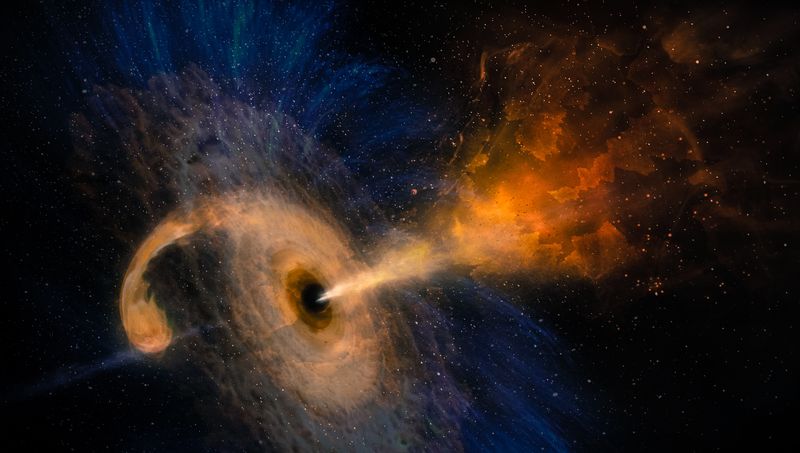
Singhal has similarly explained black holes through poetry, describing their high density and powerful gravitational pull.
He has also used verse to explain the Raman Effect and the work of Nobel laureate C V Raman. One composition describes Raman’s observation of the bluish colour of the Mediterranean Sea and the experiments that led to his discovery.
“Bhu-madhya sindhu ke jal mein jab, ek dikha doodhiya neelapan, Vikiran ke isi prakirnan se, ek divya drishti pa gaye Raman,” the poem says.
Physics concepts related to the formation of molecules have also been turned into verse, describing how atoms come closer and undergo rotational and vibrational changes before being held together by binding energy.
According to Singhal, “Physics Through Poetry” is more than an attempt to combine science with literature and offers an alternative approach to teaching that can make physics more accessible to students.
His poems cover subjects including mechanics, optics, nuclear physics, quantum mechanics, thermodynamics, and atomic and molecular spectroscopy.
Singhal’s “Kavya Bhautiki” received the Uttar Pradesh Hindi Sansthan’s “Sarjana Puraskar” in 2020. He has also received the “Sahitya Bhautiki Ratna Puraskar” from Sahitya Mandal, Nathdwara.
