
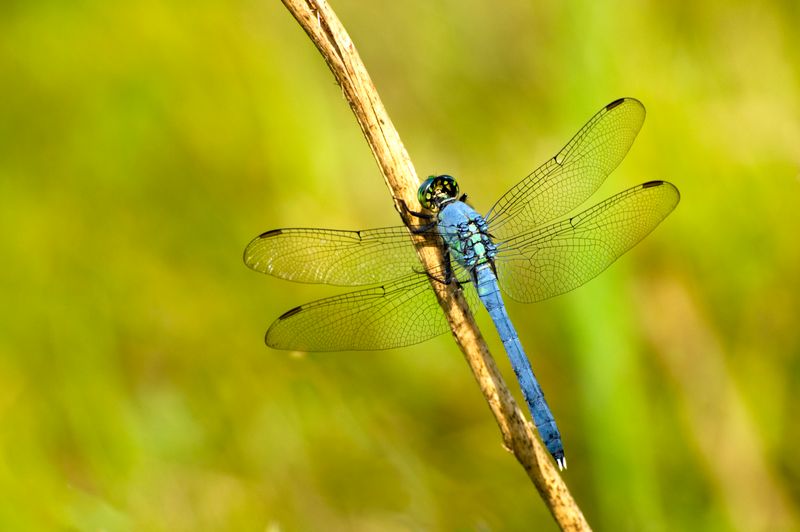
A scientific study conducted by the Sikkim University recorded 11 new species of dragonflies and damselflies for the first time in the Himalayas in the state.
The research, published recently in the journal ‘Proceedings of the National Academy of Sciences, India Section B: Biological Sciences’, was conducted by Neera Rawat, a PhD scholar in the Department of Zoology of the university, under the supervision of Professor Bhoj K Acharya of the department, along with joint supervision by K A Subramanian of the Zoological Survey of India, an official statement said.
“These new discoveries highlight the rich yet understudied taxa of the region and significantly adds to our understanding of insect biodiversity in the region,” it said.
Dragonflies and damselflies, collectively known as odonates, are considered key indicators of environmental health. Their life cycle spans both water and land, with larvae developing in freshwater habitats such as streams and ponds, and adults occupying surrounding vegetation, the statement said.
Because of this amphibiotic life cycle, the occurrence and higher diversity of odonates often reflect the ecological condition and better quality of freshwater ecosystems.
In addition to their ecological importance, odonates serve as natural biocontrol agents as both larvae and adults. This makes them an important component of ecosystem functioning and biodiversity, it said.
Fieldwork for the study was conducted between April and October 2024 across multiple locations in Sikkim, including areas around Gangtok, Jorethang and Mangan, representing different environmental and urbanisation gradients.
Researchers surveyed streams, rivulets and other freshwater bodies, recording a total of 52 species, including 28 dragonflies and 24 damselflies, it said.
Of these, 11 species were documented in the state for the first time. These include Aristocyphatrifasciata, Calicnemiaimitans, Coelicciaschmidti, Gynacanthasubinterrupta, Lamelligomphusrisi, Nepogomphusmodestus, Perissogomphusstevensi, Scalmogomphusbistrigatus, Stylogomphusinglisi, Cratillalineata and Sympetrum orientale, the statement said.
The findings increase the total number of known odonate species in Sikkim from 82 to 93, extending the known range of these insects into the eastern Himalayan region, it said.
Researchers have called for continued studies to better understand the distribution, population trends and ecological roles of odonates, as well as to support conservation efforts in fragile mountain ecosystems.
